Every fall it's the same story. One person comes in with a cough, and two weeks later half the team is out. You can't stop flu season, but you can make your office a harder place for it to spread.
Here's a practical cleaning plan built on CDC guidance, written for New Jersey offices, schools, clinics and shops.
What flu season costs a business
The CDC estimates the 2024-2025 flu season caused 51 million illnesses, 23 million medical visits and 710,000 hospitalizations, and it rated the season's severity as high.
For employers, the long-standing CDC estimate is 17 million workdays lost to flu each year among working-age adults, plus about $6.2 billion a year in indirect costs, mostly from lost productivity. That's before you count the people who come in sick and spread it.
How flu actually spreads
Be realistic about what cleaning can and can't do. According to CDC, flu spreads mainly through droplets when sick people cough, sneeze or talk. Less often, a person can catch it by touching a surface with the virus on it and then touching their mouth, nose or eyes.
So cleaning is one layer, not a force field. It works best alongside vaccination, handwashing and a culture where people stay home when they're sick.
How long does the virus last on a desk? CDC's school cleaning guide says most studies show flu viruses can live and potentially infect a person for only 2 to 8 hours after landing on a surface. That short window is exactly why daily cleaning matters more than a big monthly scrub.
The high-touch list
CDC's facility guidance names the surfaces to clean regularly: pens, counters, door handles, stair rails, elevator buttons, touchpads, restroom fixtures and desks. Its flu guide for schools adds keyboards, faucet handles, phones and shared items.
For a typical NJ office, that becomes:
- Entrances: door handles, push plates, buzzer and elevator buttons, stair rails
- Workstations: desks, keyboards, mice, phones, shared tablets and pens
- Meeting rooms: table tops, chair arms, remotes, conference phones
- Break room: fridge and microwave handles, coffee machine buttons, faucet, counters, tables
- Restrooms: faucets, flush handles, stall locks, soap and towel dispensers, door handles
- Shared equipment: copiers, printers, time clocks, card readers
Clean first, disinfect where it counts
CDC's facility guidance separates the two. Cleaning with soap or detergent removes most germs and dirt. Disinfecting uses chemicals to kill germs that remain, and CDC recommends it where people have obviously been ill, for example a desk or restroom used by someone who went home sick.
When you disinfect, read the label. Every product has a contact time, which is how long the surface has to stay wet to work. Spraying and wiping right away usually doesn't do the job.
A flu-season cleaning schedule
| Area | Frequency during flu season |
|---|---|
| High-touch points (handles, buttons, rails) | Daily, more often in busy lobbies |
| Restrooms | Daily, with restocking of soap and paper towels |
| Break room surfaces and appliance handles | Daily |
| Desks and keyboards | Daily wipe (ask staff to clear desks at night) |
| Floors, trash, entry mats | Daily or per visit |
| Targeted disinfection | Same day when someone goes home sick |
| Deep clean: vents, upholstery, baseboards | Once before the season starts |
Make handwashing easy
The CDC reports that handwashing reduces respiratory illnesses like colds in the general population by 16 to 21 percent. You can't make people wash their hands, but you can make it easy. Keep soap and paper towels stocked, put sanitizer at entrances and in meeting rooms, and make sure restroom sinks are clean enough that people want to use them.
Where a commercial cleaning crew helps
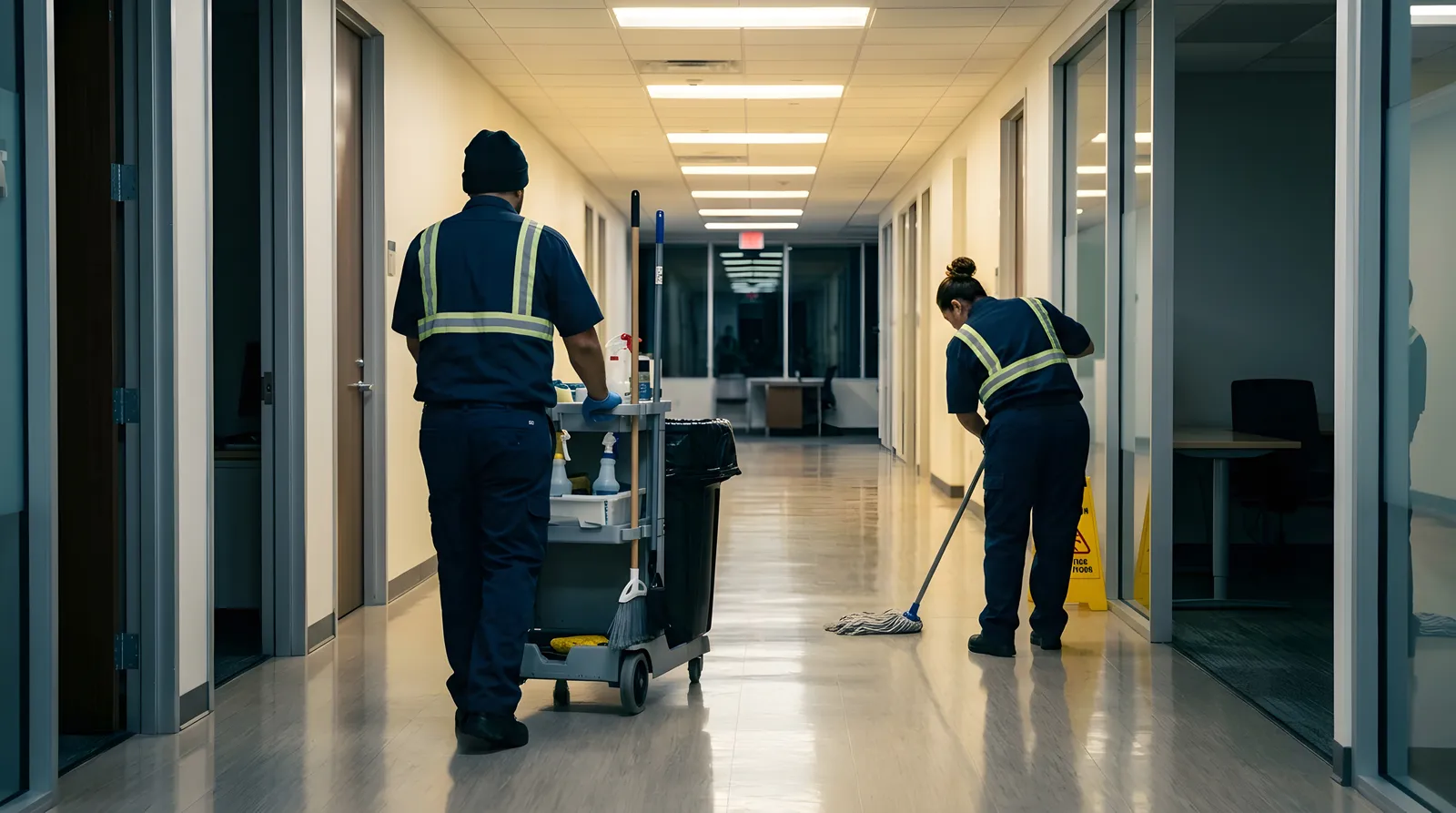
Your staff shouldn't be spending their afternoon wiping door handles. A professional office cleaning or janitorial crew works from a checklist, uses the right products the right way, and shows up on schedule during the weeks you need it most.
Union's Cleaning Services supports offices, schools and facilities across Union, Essex, Middlesex, Hudson, Somerset and Morris counties with insured, background-checked crews. If you want your space ready before flu season peaks, request a free quote and we'll build a schedule around your hours.
Want a cleaner, healthier space without the work?
Union's Cleaning Services sends insured, background-checked crews to homes and businesses across Union, Essex, Middlesex, Hudson, Somerset and Morris counties. Tell us what you need and we'll send a free quote, usually the same day.
Frequently asked questions
How long does the flu virus live on office surfaces?
CDC's school cleaning guide says most studies show flu viruses can live and potentially infect a person for only 2 to 8 hours after landing on a surface. That's why daily cleaning of high-touch surfaces matters during flu season.
Do I need to disinfect my whole office during flu season?
Usually not. CDC recommends regular cleaning of high-touch surfaces, and disinfecting where people have obviously been ill. Focus effort on door handles, desks, keyboards, phones, restroom fixtures and shared kitchen areas.
How often should high-touch surfaces be cleaned at work?
During flu season, at least daily. CDC's flu guidance for schools calls for daily sanitizing of often-touched surfaces like desks, countertops, doorknobs, keyboards, faucet handles and phones.