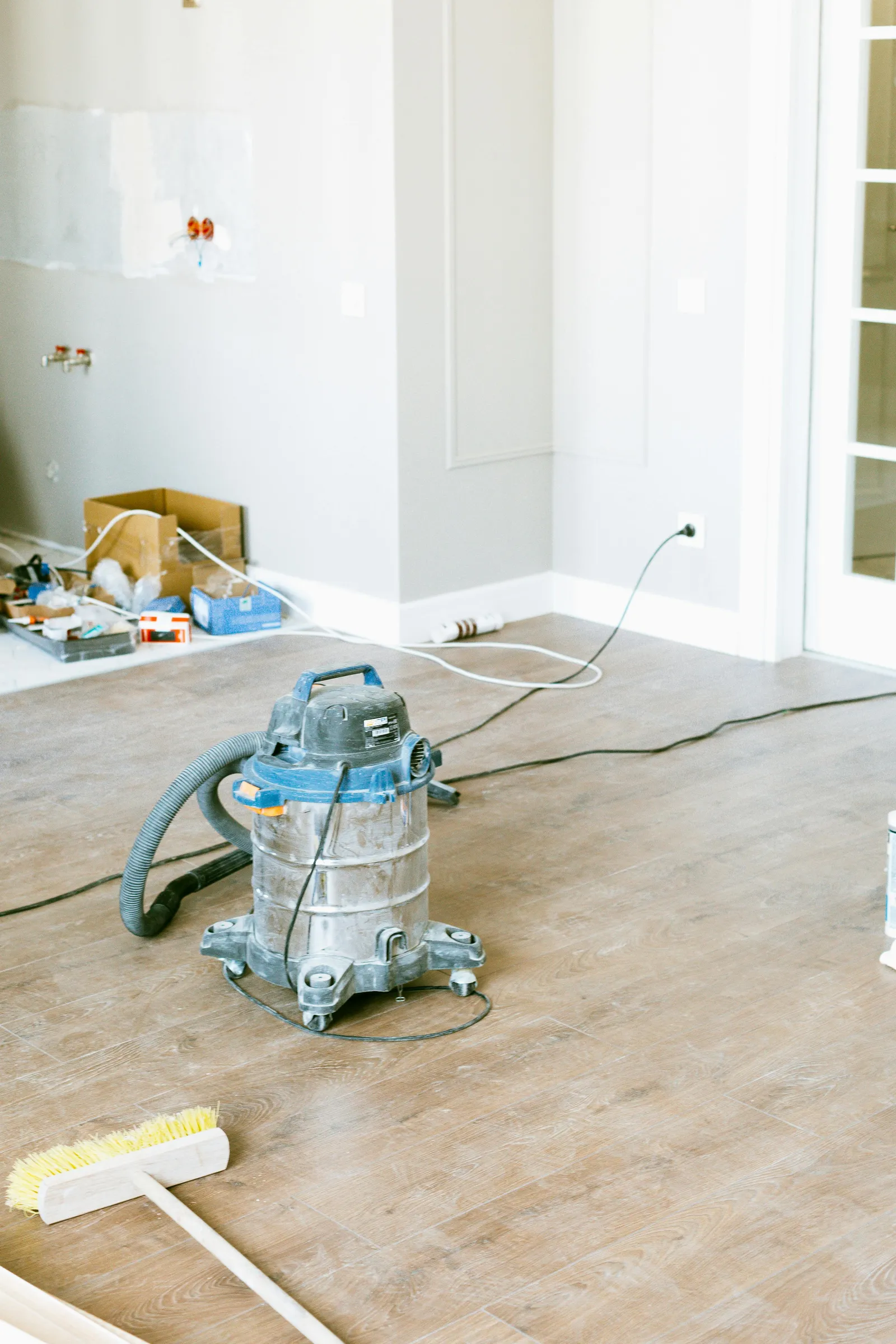
The contractor is gone, the paint is dry, and the space looks almost done. Then you run a finger across a window sill. Construction dust gets everywhere: inside cabinets, on top of door frames, in vents and in every corner. And some of it isn't ordinary dust.
What's in construction dust
Cutting, grinding and sanding concrete, stone, tile and brick releases respirable crystalline silica. When OSHA finalized its silica rule, the U.S. Department of Labor said about 2.3 million workers face silica exposure on the job, and that the rule would curb lung cancer, silicosis, chronic obstructive pulmonary disease and kidney disease.
Older buildings add another concern: lead. Sanding or demolishing surfaces with lead-based paint creates lead dust, which is why EPA regulates renovation work in homes built before 1978.
Why a broom and a shop vac aren't enough
OSHA's construction silica standard (29 CFR 1926.1153) sets the permissible exposure limit at 50 micrograms per cubic meter averaged over 8 hours. It also has housekeeping rules that tell you a lot about how this dust should be handled:
- Dry sweeping and dry brushing are not allowed where they could contribute to silica exposure, unless wet sweeping, HEPA-filtered vacuuming or other low-dust methods aren't feasible.
- Compressed air can't be used to clean clothing or surfaces where it could add to exposure, unless it's paired with a ventilation system that captures the dust cloud, or no other method is feasible.
The takeaway for any cleanup: sweeping and blowing just put fine dust back in the air. Wet methods and HEPA vacuums capture it.
The lead side: older NJ homes and buildings
New Jersey has a lot of older housing. The NJ Department of Health reports approximately 2.4 million housing units built before 1980 and more than 900,000 built before 1950. It notes that lead-based paint wasn't discontinued for residential use until 1980.
Under EPA's Renovation, Repair and Painting rule, firms paid to renovate pre-1978 homes, apartments and child-occupied facilities must use work-area containment and do a thorough cleanup followed by a verification procedure. EPA's 2026 compliance guide describes HEPA-vacuuming all surfaces in the work area, then a certified renovator wiping floors, countertops and sills with a wet disposable cloth and comparing it to a verification card.
That verification is the renovator's legal job. A professional cleaning crew comes after, for the detailed final clean that makes the space livable.
What a post-construction clean covers
A good post-construction clean happens in stages:
Rough clean (after major work)
- Remove leftover debris, packaging and stickers
- HEPA-vacuum floors, sills and ledges
- Wipe down walls and surfaces to take off the first layer of dust
Final clean (before move-in or opening)
- HEPA-vacuum and damp-wipe every horizontal surface, top to bottom
- Clean inside cabinets, drawers, closets and shelves
- Wipe door frames, trim, baseboards and outlet covers
- Clean vent covers, light fixtures and ceiling fans
- Clean windows, glass, sills and tracks
- Remove paint, caulk and adhesive residue from fixtures and floors
- Detail kitchens and bathrooms, including appliances and fixtures
- Wash hard floors, and vacuum carpets thoroughly
Touch-up clean (optional)
- A quick pass right before the owner, tenants or customers walk in
Tips for contractors and property owners
- Ask your contractor what dust controls they used and whether lead-safe practices applied.
- Change HVAC filters after the work is done. Dust gets pulled into the system.
- Don't move furniture back in until the final clean is finished.
- Keep kids, pregnant family members and pets out until cleanup is complete, especially in pre-1978 homes.
- Book the cleaning crew early so the schedule lines up with your punch list.
Book your post-construction clean
Union's Cleaning Services handles post-construction cleaning for contractors, property managers, businesses and homeowners across Union, Essex, Middlesex, Hudson, Somerset and Morris counties. Our crews are insured and background-checked, and we'll work around your closeout date. Request a free quote.
Want a cleaner, healthier space without the work?
Union's Cleaning Services sends insured, background-checked crews to homes and businesses across Union, Essex, Middlesex, Hudson, Somerset and Morris counties. Tell us what you need and we'll send a free quote, usually the same day.
Frequently asked questions
Why shouldn't construction dust be dry swept?
Construction dust can contain respirable crystalline silica. OSHA's construction silica standard does not allow dry sweeping or dry brushing where it could contribute to worker exposure unless wet sweeping, HEPA-filtered vacuuming or other low-dust methods aren't feasible.
Is renovation dust in older NJ homes dangerous?
It can be. Homes built before 1978 may contain lead-based paint, and New Jersey has about 2.4 million housing units built before 1980. EPA's lead renovation rule requires containment, thorough cleanup and a cleaning verification step for covered renovation work.
When should I book a post-construction clean?
After the trades are finished and heavy debris is removed, but before furniture goes back in or the space opens. Many projects also add a final touch-up clean right before move-in or opening day.
Does a post-construction clean replace the contractor's lead clearance?
No. Lead-safe cleanup and cleaning verification on covered renovations are the certified renovator's responsibility. A professional cleaning crew handles the detailed final clean of the finished space.