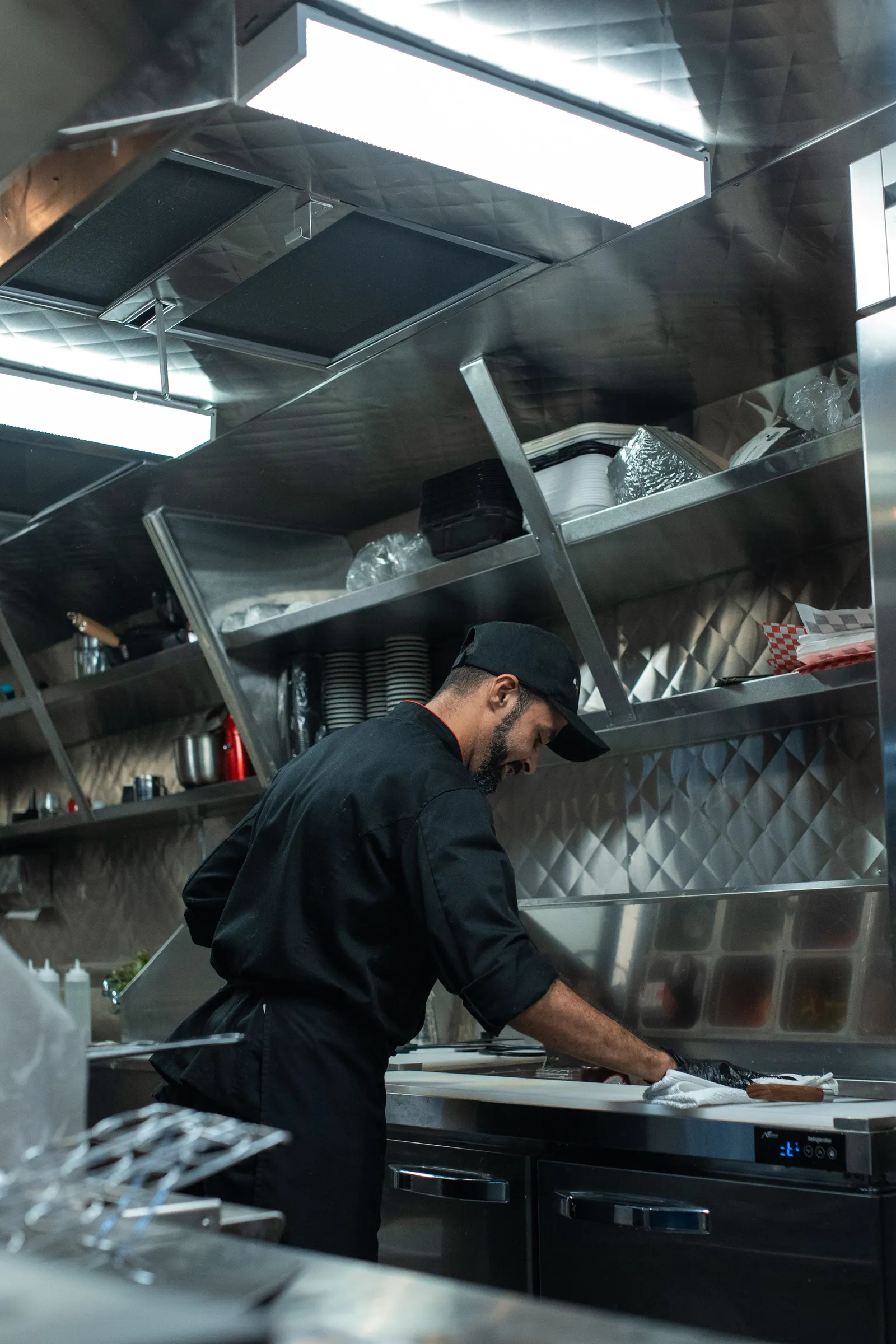
A busy kitchen gets dirty fast. Grease builds on hoods, walls and floors, food bits end up under equipment, and by Friday night nobody has time to deal with it. But a dirty kitchen isn't just an inspection problem. It's a fire problem and a food safety problem.
Here's what the numbers say and how to build a cleaning routine that holds up.
The fire risk is real
According to the National Fire Protection Association, U.S. fire departments responded to an estimated average of 7,410 structure fires per year in eating and drinking establishments between 2010 and 2014. Those fires caused an average of 3 civilian deaths, 110 injuries and $165 million in direct property damage each year, and three out of five involved cooking equipment.
Grease is fuel. When it coats hoods, filters and nearby surfaces, a small flare-up has somewhere to go.
Hood and exhaust inspections: the NFPA 96 schedule
NFPA 96 is the fire code standard for commercial cooking ventilation. Its inspection schedule (Table 11.4 in the 2017 edition, as published by local fire and building departments) depends on how you cook:
| Type of cooking | Inspection frequency |
|---|---|
| Solid fuel (wood, charcoal) | Monthly |
| High volume: 24-hour cooking, charbroiling, wok cooking | Quarterly |
| Moderate volume | Every 6 months |
| Low volume: churches, day camps, seasonal businesses, senior centers | Yearly |
If the inspection finds grease buildup, the system gets cleaned. Hood and duct cleaning is specialized work done by certified hood cleaning contractors, and your local fire official can tell you which edition of the code your town enforces.
New Jersey's food code on cleaning
New Jersey restaurants follow the state's food code, Chapter 24 (N.J.A.C. 8:24). One rule every kitchen manager should know: if equipment food-contact surfaces and utensils are used with potentially hazardous food, they must be cleaned throughout the day at least every four hours. The rule lists some exceptions, such as certain refrigerated rooms, so check the full text for your setup.
Why it matters: the CDC estimates that 48 million people get sick from foodborne illness each year. Of those, 128,000 are hospitalized and 3,000 die. Clean surfaces are one of the basic defenses.
A practical kitchen cleaning schedule
Throughout the shift
- Clean and sanitize food-contact surfaces and utensils at least every 4 hours when used with potentially hazardous food
- Wipe spills right away, especially grease and liquids on the floor
- Empty trash before it overflows
End of every day
- Degrease flat-tops, fryers and range surfaces per manufacturer instructions
- Clean equipment exteriors, handles and knobs
- Sweep, degrease and mop floors, including under movable equipment
- Clean floor drains and mats
- Clean and sanitize prep sinks and dish areas
Weekly
- Wash hood filters (or swap per your service schedule)
- Clean walls and backsplashes behind the line
- Deep clean walk-in floors and shelving
- Delime faucets and dish machines as needed
Monthly and beyond
- Pull out and clean behind heavy equipment
- Clean ceiling tiles, light covers and vents near the line
- Book hood and duct service on your NFPA 96 schedule
Don't forget the front of house
Guests judge your kitchen by what they can see. Dining tables, chair legs, booths, windows, entrances and especially restrooms tell customers how you run the place. A clean restroom does a lot for your reviews.
Where Union's Cleaning Services fits in
Our restaurant and kitchen cleaning crews handle the heavy, after-hours work your staff can't get to: degreasing floors and walls, cleaning equipment exteriors, detailing dining rooms and restrooms, and deep cleans before inspections or reopening. We work around your hours so the kitchen is ready when your team arrives.
We also offer power washing for entrances, dumpster areas and sidewalks.
Serving restaurants across Union, Essex, Middlesex, Hudson, Somerset and Morris counties. Get a free quote.
Want a cleaner, healthier space without the work?
Union's Cleaning Services sends insured, background-checked crews to homes and businesses across Union, Essex, Middlesex, Hudson, Somerset and Morris counties. Tell us what you need and we'll send a free quote, usually the same day.
Frequently asked questions
How often should a restaurant kitchen hood be cleaned?
Under the inspection schedule in NFPA 96 (Table 11.4, 2017 edition): monthly for solid-fuel cooking, quarterly for high-volume cooking such as 24-hour, charbroiling or wok cooking, every six months for moderate volume, and yearly for low-volume operations. Check with your local fire official for the edition enforced in your town.
How often must food-contact surfaces be cleaned in NJ?
New Jersey's food code (N.J.A.C. 8:24-4.6) says that if used with potentially hazardous food, food-contact surfaces and utensils must be cleaned throughout the day at least every four hours, with some listed exceptions.
What causes most restaurant fires?
NFPA found that cooking equipment was involved in 61 percent of structure fires in eating and drinking establishments between 2010 and 2014.
Does a janitorial company clean kitchen exhaust ducts?
Duct and hood system cleaning under NFPA 96 is specialized work usually done by a certified hood cleaning contractor. A commercial cleaning crew handles the daily and deep cleaning of floors, walls, equipment exteriors, filters where appropriate, and dining and restroom areas.